
Sandblasting material
SAPI is your reliable partner for blasting media – over 50 years of experience, all common grits from stock.
Glass Beads
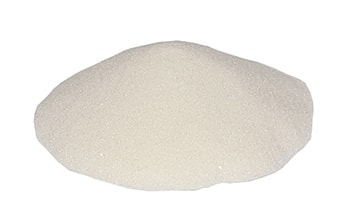
Glass bead media consists of round glass spheres that compact the surface instead of roughening it. Ideal when stainless steel, aluminium or brass should carry a soft satin sheen after blasting.
- Matt, satin finishes without roughening
- Strip stainless steel, aluminium and brass gently
- Reusable many times over – very economical
Normal Corundum / Noble Corundum
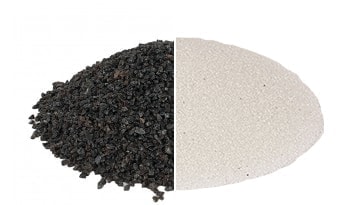
Corundum is one of the hardest abrasives after diamond and removes even stubborn rust and mill scale. Its sharp-edged grain creates the anchor profile that paints and coatings need to bond.
- Remove rust, mill scale and old paint reliably
- Keyed anchor profile before painting
- Suitable for metal, glass, stone and wood
Metallic Blasting Media
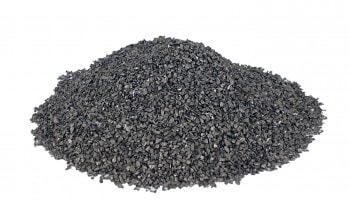
Metallic media such as steel shot and chilled iron grit are built for continuous duty in enclosed blast machines. They recirculate many times over and cut the cost per square metre blasted, cycle after cycle.
- Descaling and deburring in metal fabrication
- Continuous duty in wheel and pressure machines
- Recirculated many times and fully recyclable
Slag
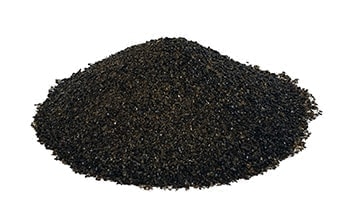
Slag is a mineral single-use abrasive for large areas in open-air blasting. It strips mill scale, rust and old coatings reliably and remains by some margin the most economical media in the whole range.
- Derust and strip large areas in open blasting
- Steel construction, bodywork, building, industry
- Grits 0.09–1.4 mm – very economical
Crushed glass
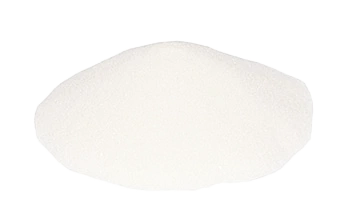
Crushed glass is produced from soda-lime glass and is iron-free, so it leaves no ferrous contamination on stainless steel. The angular grain cleans powerfully yet stays kind to the substrate.
- Break away rust, scale and coatings
- Matt and satinise glass surfaces
- Clean timber gently – environmentally friendly
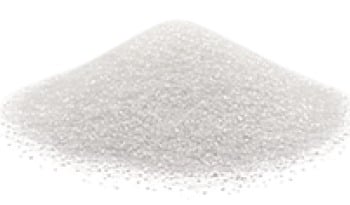
Ceramic beads of zirconium oxide are extremely hard and hold their round shape over many blast cycles. That makes them first choice for repeatable shot peening and iron-free stainless surfaces.
- Remove heat tint and oxide layers from stainless
- Shot peening for controlled work hardening
- Far longer service life than glass beads
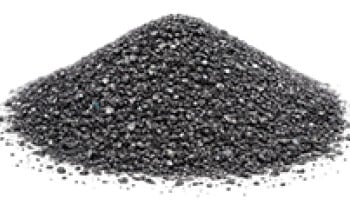
Silicon carbide reaches a Mohs hardness of around 9.5 and therefore cuts even carbide, ceramics and glass. Broadcast into epoxy and PU coatings it also delivers permanently anti-slip floors.
- Anti-slip broadcast in epoxy and PU floors
- Grinding carbide, ceramics and glass
- Mohs hardness 9.5 – highest cutting rate
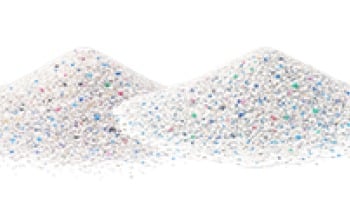
Plastic media made from urea, melamine and phenolic resin strips paint without attacking the base material. It lets you strip plastic parts, composites and aluminium gently, with no risk of metal contamination.
- Strip plastic and composite components
- Clean moulds without damaging cavities
- Deburr aluminium castings, no metal residue
Buy blasting media from SAPI – the right abrasive for every application
SAPI is a leading European manufacturer of sandblasting machines, blast cabinets and blast rooms – and a supplier of a broad range of high-quality blasting media. Because we use these abrasives ourselves, we know exactly how they behave. Every grit comes from vetted sources, is silicosis-safe and complies with European safety and quality standards.
Which abrasive for which application?
The right choice depends on the base material, on the finish you want and on the machine you run. Round media such as glass beads or ceramic beads compact the surface and leave a soft satin sheen instead of roughening it. Angular media such as corundum, crushed glass or slag cut into the surface and create the anchor profile that coatings need in order to bond. In a closed circuit a reusable abrasive pays for itself; in open-air blasting a mineral single-use media is usually the cheaper answer.
Blasting sand is not really sand
When people say sandblasting sand they almost always mean blasting media in general. Classic quartz sand has all but disappeared from the market: free crystalline silica causes silicosis, and abrasives containing more than 1 % silica are banned in open blasting. What is used today is corundum, slag, crushed glass, ceramics and metallic media – far friendlier to the operator and to the environment. Every abrasive we sell is silicosis-safe.
Why a quality abrasive pays for itself
High-grade media have a consistent particle size and shape. That gives a uniform surface finish and predictable results: the grain breaks down less, generates less dust, is gentler on nozzles and equipment and can be recirculated more often. Cheap material has to be topped up more frequently, can contaminate the workpiece and adds downtime. Calculated per square metre blasted, the better abrasive is almost always the cheaper one.
Grit sizes, packaging and delivery
We keep the common grits from roughly 0.09 to 1.4 mm permanently in stock – in 25 kg sacks, in big bags and on 1-tonne pallets. A well-stocked warehouse means short lead times, and we dispatch throughout Europe. Advice from our technical staff is free of charge.
Special grits and further media on request
At the top of this page you can see which media are available immediately. We also supply less common abrasives whenever the quantity justifies it:
- Plastic blasting media
- Garnet sand
- Ceramic beads
- Nutshell blasting media
- Silicon carbide
- Custom grit sizes to specification
Send us your enquiry with the quantity you need and we will gladly make you an offer.